Guide · Anime Chronicle
How to read a city in anime: five clues hidden in the background
A practical viewing method for reading alleys, thresholds, transit, density, and empty space as story—not decoration.
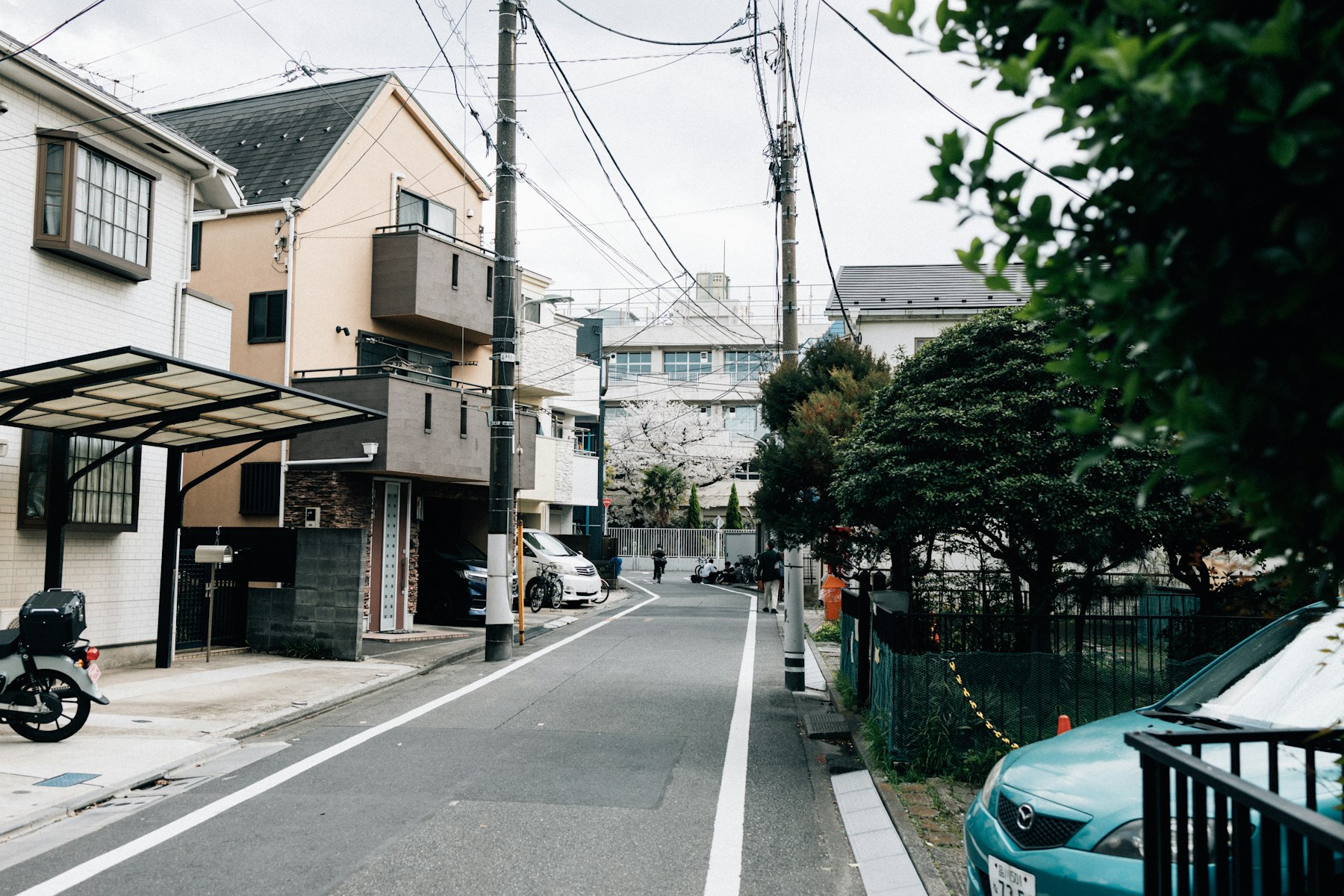
A real Tokyo residential street used to study place details; not an anime frame or evidence of a specific title’s reference location.
Checked 4 September 2026 against material from Japan’s Agency for Cultural Affairs Media Arts Current Contents. MACC describes background art as the landscapes framing character movement and examines its relationship with real architecture and cities. The method below is our original editorial analysis. The accompanying image is a real Tokyo street, not an anime frame, and we do not claim it inspired a particular title.
1. Start with the street. Is it designed for passing through or lingering? Pavement width, overhead wires, parked bicycles, shopfronts, and the amount of visible sky set a rhythm before dialogue arrives. A narrow lane can create intimacy or pressure; a broad road can suggest freedom or isolation. Do not interpret one shot alone—watch how the same place changes with the relationship.
2. Find thresholds: an apartment door, school gate, station platform, bridge, or line of shade. A threshold is not neutral scenery; it is a decision point. Who can cross, who waits, and who remains on one side while hearing the other? Farewells and confessions often work because the city gives emotion a physical border.
3. Treat transit as a clock. Trains, buses, lifts, and escalators impose duration and direction. An arriving train can end a conversation; a window turns the city into images that pass without touch. Note when a character controls speed and when infrastructure carries them. That difference reveals choice versus necessity.
4. Read density and absence together. Signs, voices, and pedestrians make a space public, while an empty seat or shuttered shop may direct attention to who is missing. Ask what the designer chose to leave space around. Emptiness is not always sadness; it can be relief, waiting, or the chance to notice someone who would disappear in a crowd.
5. Rewatch one minute without dialogue. Make three columns: what the character moves, what moves around them, and what remains still. If footsteps, signals, and light change your understanding, you have begun reading the city as narrative. Do not hunt for one correct symbol; anchor interpretation in visible, repeated evidence.
Sources
Sources
Dates and availability can vary by territory. Time-sensitive claims link to their direct source.
Continue the story
Related picks for anime fans
Explore manga, art books, drawing tools, and collectibles on Amazon.sa. As an Amazon Associate I earn from qualifying purchases, at no extra cost to you. Affiliate disclosure
As an Amazon Associate I earn from qualifying purchases.
Complete manga box sets
Browse collected series and story arcs for an organized anime library.
Browse on Amazon.sa ↗02Anime art and storyboard books
Visual references for character design, backgrounds, and scene craft.
Browse on Amazon.sa ↗03Manga drawing kits
Pens, sketchbooks, and inking tools for new and experienced artists.
Browse on Amazon.sa ↗04Licensed figures and collectibles
Search for authentic character figures and display collectibles.
Browse on Amazon.sa ↗05Light novels and collector editions
Stories that expand anime worlds, with editions for reading and collecting.
Browse on Amazon.sa ↗06Anime gifts and desk accessories
Practical ideas for gifts, desks, and a more personal viewing space.
Browse on Amazon.sa ↗