History · Anime Chronicle
Five rooms of sound: how Yoko Kanno taught anime to change musical worlds
From a virtual idol’s voice to bounty-hunter jazz and the languages of the network, a listening guide to five scores that build worlds rather than decorate scenes.

A real photograph of Yoko Kanno and Megumi Nakajima performing at Anime Expo on 2 July 2010; it does not imply endorsement of this article or its recommendations.
Verified 24 August 2026. We checked Yoko Kanno’s official FlyingDog profile and official catalog pages for Macross Plus, The Vision of Escaflowne, Cowboy Bebop, Ghost in the Shell: Stand Alone Complex, and Wolf’s Rain. FlyingDog confirms vinyl editions of O.S.T.3 and Solid State Society for 26 August 2026. That date is confirmed, not rumor, although actual stock remains retailer- and territory-dependent. The listening analysis below is original editorial work, not copied label language or an implication that Kanno or the performers endorse this article.
Kanno’s career does not form a straight line toward one signature sound. Her official profile puts pop, rock, jazz, funk, techno, and classical music in the same sentence, yet variety is not the real trick. The deeper move is to ask what a world is made of before writing its tune: metal and aircraft, stone and myth, nightclubs and tired cities, or data and hackable bodies? She then chooses an ensemble, a language, and an acoustic distance that makes the place audible with your eyes closed. This is not a “best five” ranking. It is five rooms, each with a different listening question.
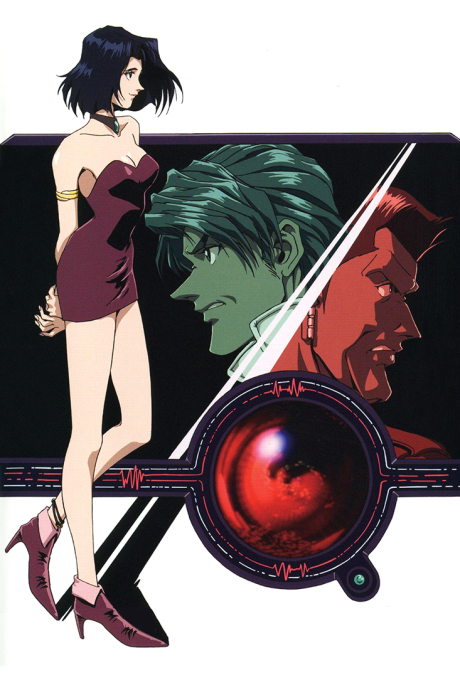
1. Macross Plus (1994) — can a voice be character, interface, and weapon? In Sharon Apple’s world, a song is not a break between battles; it belongs to the technology organizing collective desire. “Voices” gives memory a fragile human texture, while electronic passages make industrial polish seductive and alarming at once. Notice when sound feels close to Myung’s ear and when it expands as though it owns the city. Kanno teaches that music inside a story can lie as persuasively as any character.
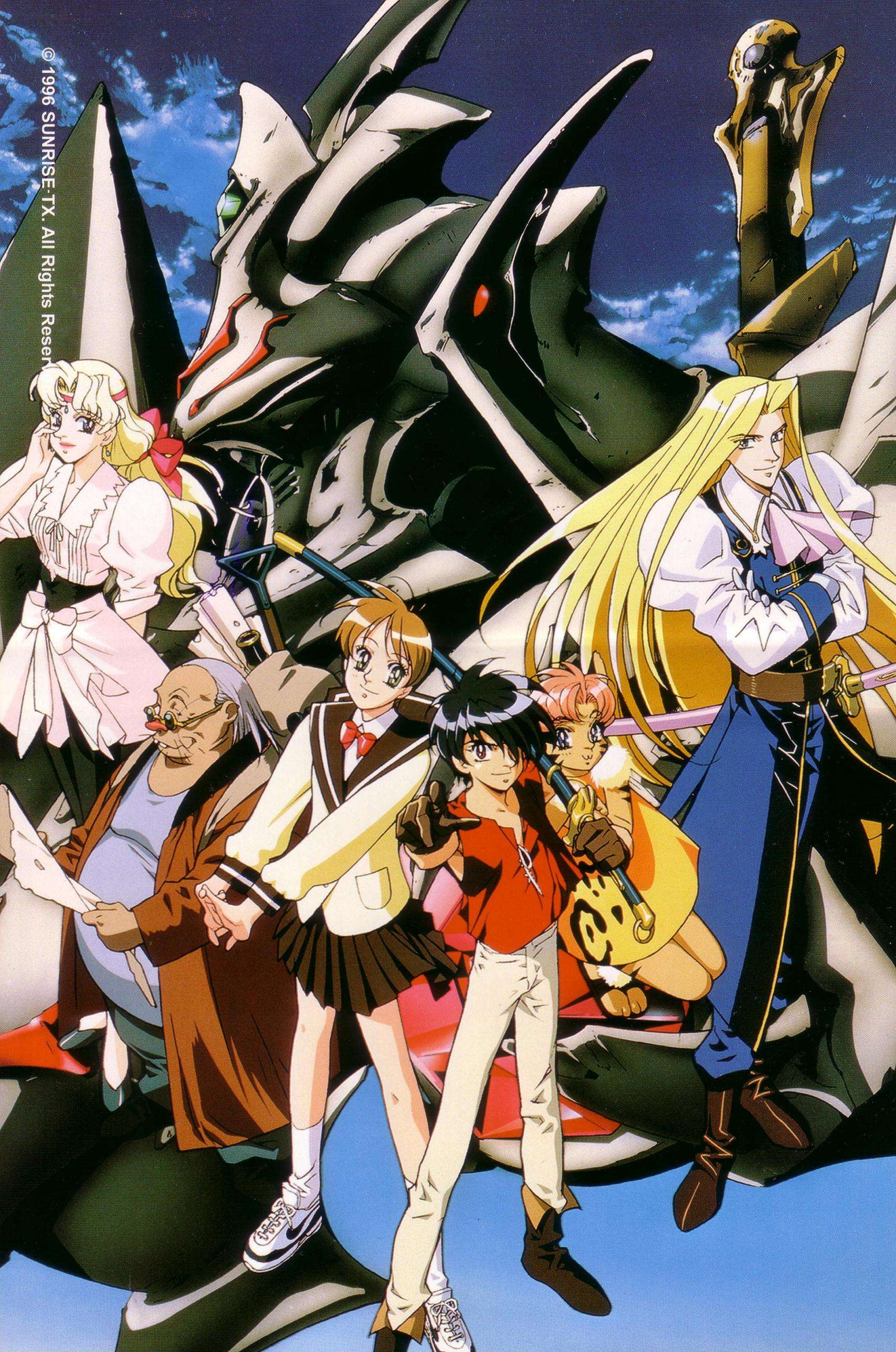
2. The Vision of Escaflowne (1996) — how does an orchestra become geography? FlyingDog’s official catalog records the Warsaw Philharmonic in music created by Kanno with Hajime Mizoguchi. Scale alone is not the point. Choirs raise mountains and myth; brass gives machines the weight of ritual; Maaya Sakamoto’s voice returns fantasy to the heart of a displaced teenager. Listen to the distance between “Dance of Curse” and “Yakusoku wa Iranai”: the same world can sound like cosmic fate and a private decision.
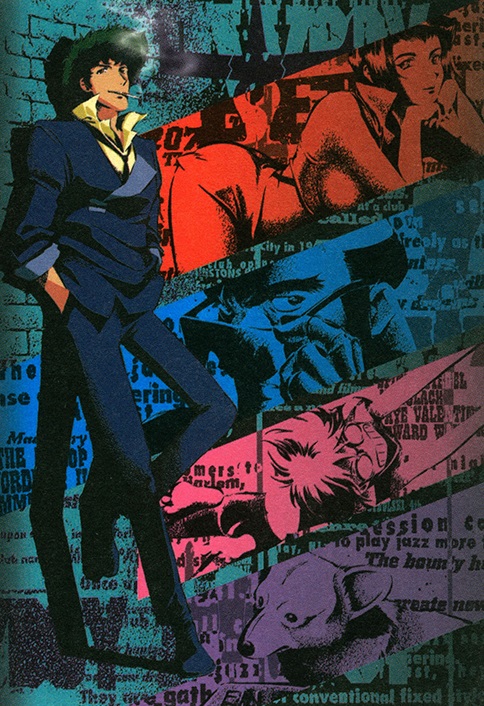
3. Cowboy Bebop (1998) — what if genre is character biography? The official album opens with “Tank!” and moves through bebop, blues, country, and ballad. This is not a showroom of styles. Every turn says something about a crew carrying old lives onto new planets. Brass rhythm sells Spike’s confidence; blues reveals the bill after the body goes still; “Space Lion” makes emptiness larger than the ship. Do not ask only, “Is this jazz?” Ask who is performing freedom and who can still hear the past playing.

4. Ghost in the Shell: Stand Alone Complex (2002) — how does a networked body hear itself? Kanno gives the network no single language: English, Russian, Italian, and wordless voice pass beside electronic pulse and live instruments. “inner universe” does not explain cyberspace; it makes it a place of overlapping identities, while pieces such as “ride on technology” move as if the city were an operating system that never sleeps. Hear the friction between intimate voice and cold beat. The question is not whether the machine is human, but which part of the human has become protocol.
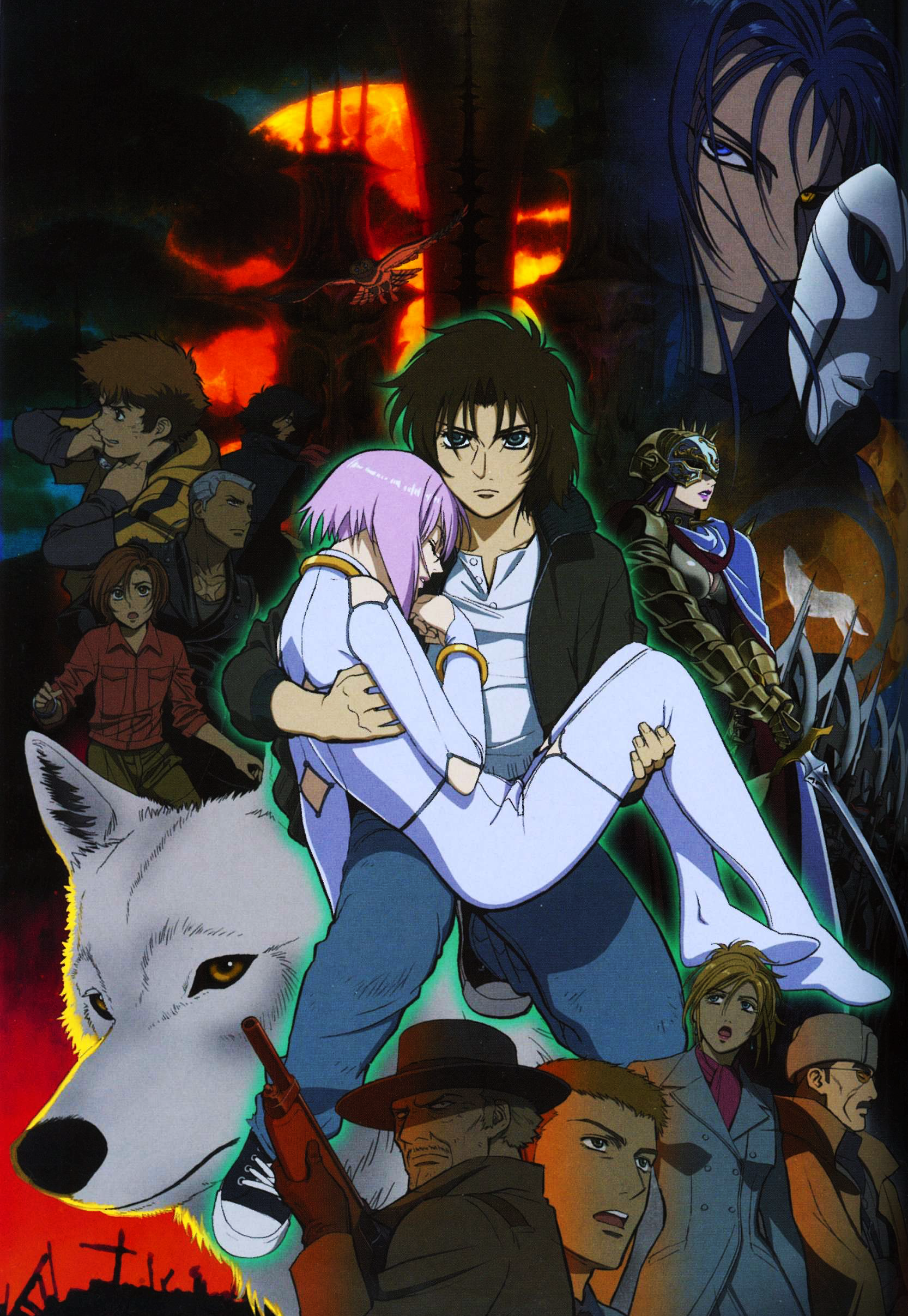
5. Wolf’s Rain (2003) — how do voices from no single country draw a lost place? The official album credits a broad vocal cast, including Joyce, Maaya Sakamoto, Ilaria Graziano, and Steve Conte. Waltz, bossa nova, rock, and orchestral ache meet without turning the world into musical tourism. “Gravity” does not close grief; it gives grief a road. “valse de la lune” makes the moon a memory before it is a symbol. Listen to the air after a sung phrase: paradise is not a point on a map here, but a distance made by longing.
A five-step listening lab: first, choose a dialogue-free scene and decide whether the score describes the place or a character’s consciousness. Second, note the first instrument or human voice to enter, then ask who owns the scene afterward. Third, find an abrupt musical cut; silence is a compositional decision too. Fourth, compare the opening song with a quiet cue: do they present one world or opposing faces of it? Fifth, replay the scene almost muted. If visual rhythm still reads, music was not a crutch; if the shot changes meaning, music was a co-writer.
Why return now? FlyingDog’s vinyl reissues of Ghost in the Shell: Stand Alone Complex make the recording’s physical architecture visible again: side order, running time, and the hand-turn between discs alter attention. That does not make vinyl automatically “better” than streaming or CD. The confirmed 26 August release is an occasion to reread the score, not a fandom loyalty test or a demand to buy one format. Listen through the legal option available to you and attend to structure before equipment.
The thread through all five rooms is not jazz, orchestra, or multilingual vocals. It is music’s refusal to remain behind the image. In Kanno’s work, a score may arrive before the world, expose its lie, or give a character space dialogue withholds. The best entry question is therefore not “What is the famous track?” but “What would I fail to understand if this music fell silent?” Answer once in every room and you move from hearing a beautiful cue to reading an anime with your ears.
Sources
Sources
Dates and availability can vary by territory. Time-sensitive claims link to their direct source.
- FlyingDog: official Yoko Kanno profile
- Macross official site: Macross Plus and its music credit
- FlyingDog: official The Vision of Escaflowne soundtrack catalog
- FlyingDog: official Cowboy Bebop album and track list
- FlyingDog: official Ghost in the Shell: SAC vinyl release announcement
- FlyingDog: official Wolf’s Rain album and performer credits
Continue the story
Related picks for anime fans
Explore manga, art books, drawing tools, and collectibles on Amazon.sa. As an Amazon Associate I earn from qualifying purchases, at no extra cost to you. Affiliate disclosure
As an Amazon Associate I earn from qualifying purchases.
Yoko Kanno and Seatbelts’ Cowboy Bebop soundtrack
Hear the album sequence outside the episodes; verify format, edition, and region before ordering.
Browse on Amazon.sa ↗02Ghost in the Shell: Stand Alone Complex soundtrack
Compare electronic structure and multilingual vocals; verify album number, format, and label.
Browse on Amazon.sa ↗03Wolf’s Rain original soundtrack
For a continuous listen to its voices, waltzes, and bossa nova; verify edition and format.
Browse on Amazon.sa ↗